The car
Jeep Grand Cherokee WJ
The second-generation Grand Cherokee, sold for the 1999 to 2004 model years: a five-seat SUV on solid axles, built in Detroit and, as the WG, in Graz for export. From 2002 it could have the 4.7 High Output V8, the engine this app is written for.
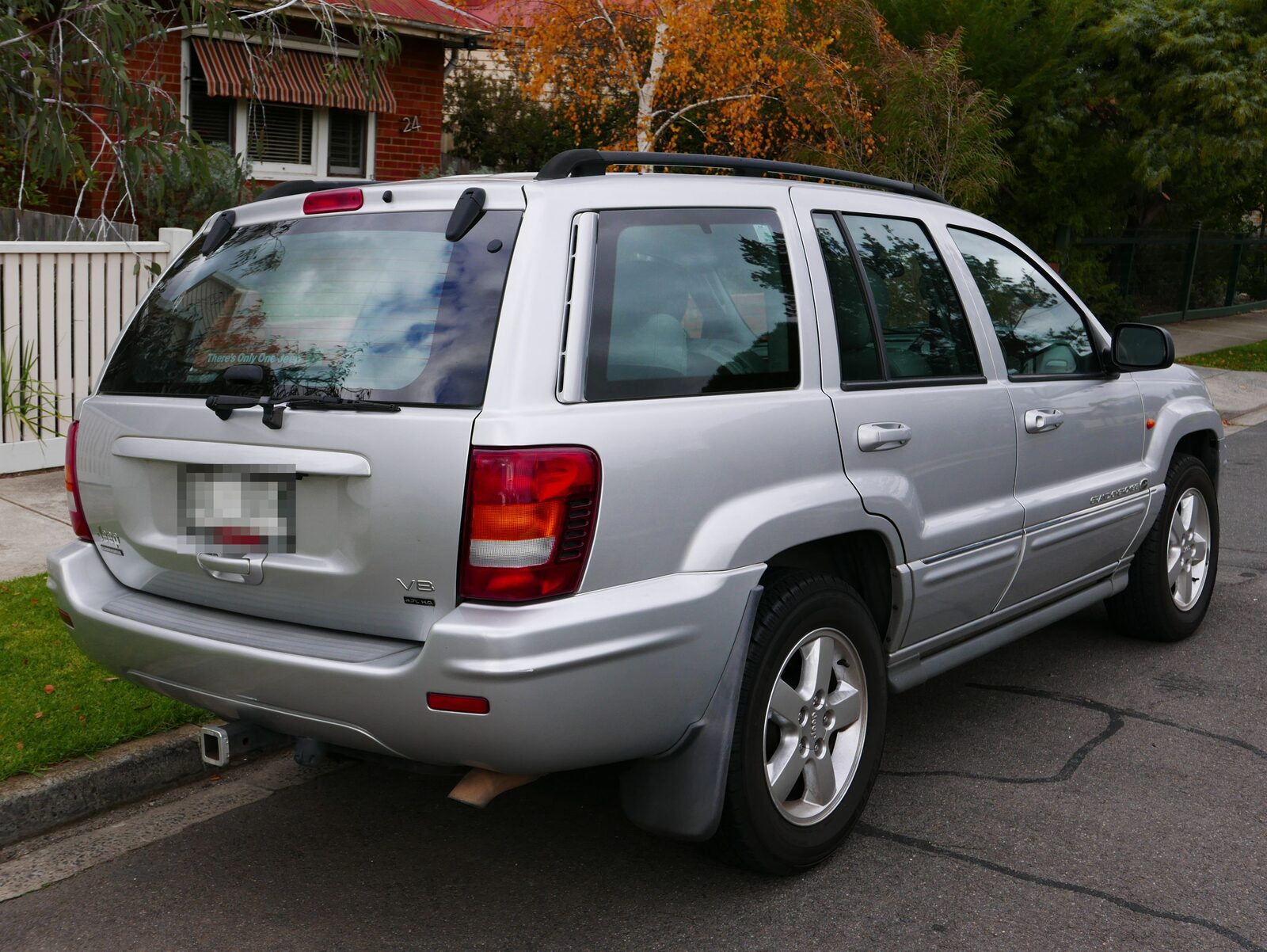
At a glance
Where the parts that matter to the app sit on the car, and the facts that define it.
- Engine
- 4.7 High Output V8Model years 2002–2004: 265 hp in the US brochure, 190 kW (258 PS) in Europe.
- Gearbox
- 545RFEElectronic automatic, sold as a five-speed, with a spare second ratio for kickdown.
- Four-wheel drive
- Quadra-Trac II or Quadra-DriveFull-time; Quadra-Drive adds locking differentials front and rear.
- Where the app plugs in
- 16-pin diagnostic portUnder the dashboard by the steering column, on Chrysler’s PCI bus.
- Generation
- Second Grand Cherokee, model years 1999–2004
- Built in
- Detroit, USA (WJ) and Graz, Austria (WG)
- Body
- Steel unit body, five seats, solid axles front and rear on coil springs
- Engine for this app
- 4.7 V8 High Output, model years 2002–2004: 265 hp in the US, 190 kW (258 PS) in Europe
- Gearbox with the HO
- 545RFE electronic automatic
- Four-wheel drive
- Quadra-Trac II or Quadra-Drive; two-wheel drive also sold
- Data bus
- Chrysler PCI, SAE J1850 VPW
WJ and WG
One body generation, two factories, two names. Figures on this page come from factory literature first and reference works second; where markets or documents differ, both values are shown.
WJ is the code for the second Grand Cherokee. North American cars came from the Jefferson North plant in Detroit, where production started in the summer of 1998 for the 1999 model year.
WG is the name used for the export cars built in Graz, Austria, which covers most of the European ones. Steyr-Daimler-Puch, later Magna Steyr, began series production there on 14 January 1999, under an agreement that ran to the end of 2004. Some European sales listings carry on into 2005.
The High Output V8 arrived for the 2002 model year. In the US it was standard on the Overland and optional on the Limited. In Europe the 2004 Overland came with either the HO petrol engine or the 2.7 diesel, so an Overland badge alone does not tell you which engine a car has.
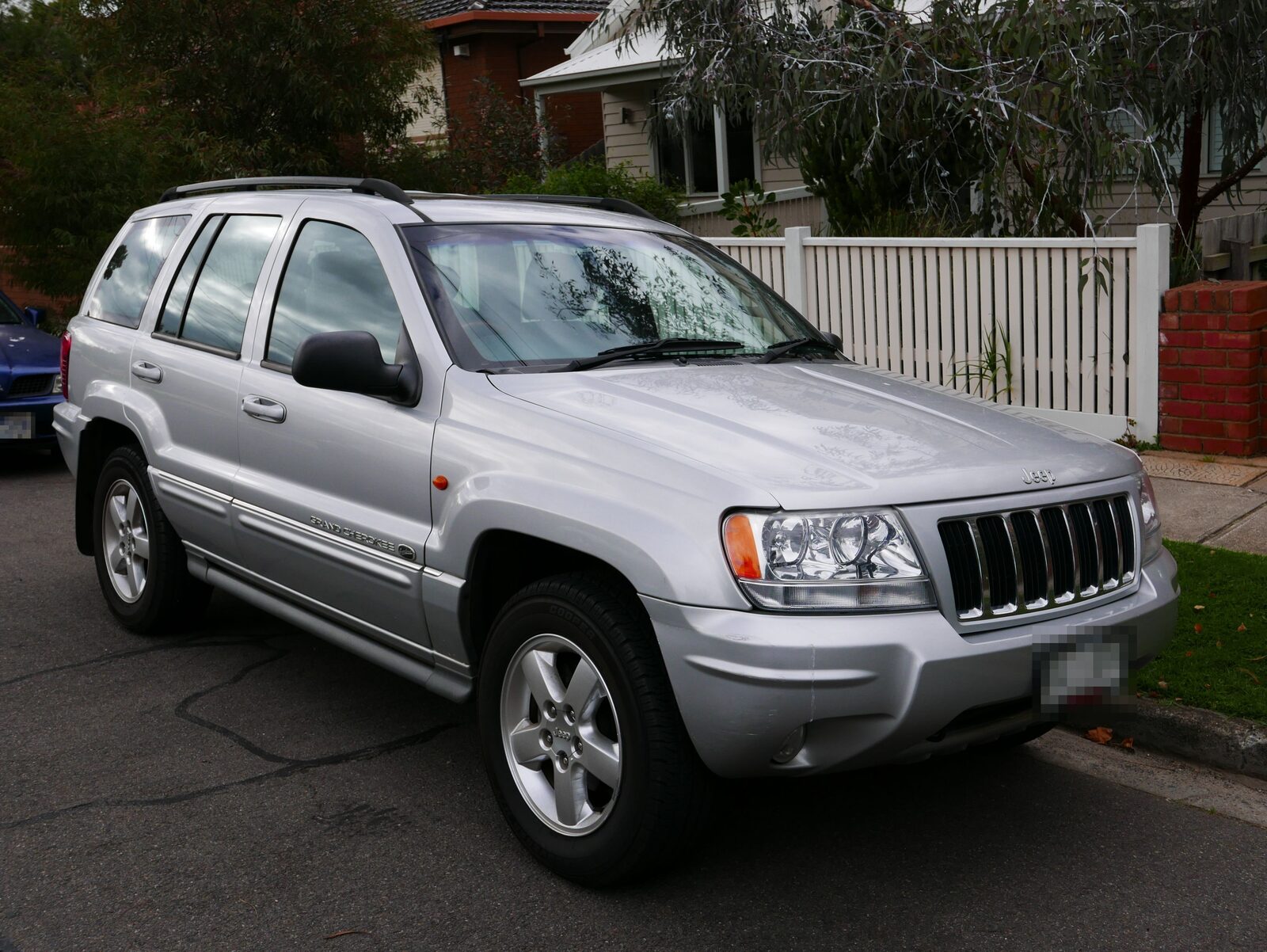
The 2004 model-year refresh, with a new front fascia, a reshaped grille and round fog lamps, appeared early in calendar 2003. Model year, build date and first registration are three different things on these cars.
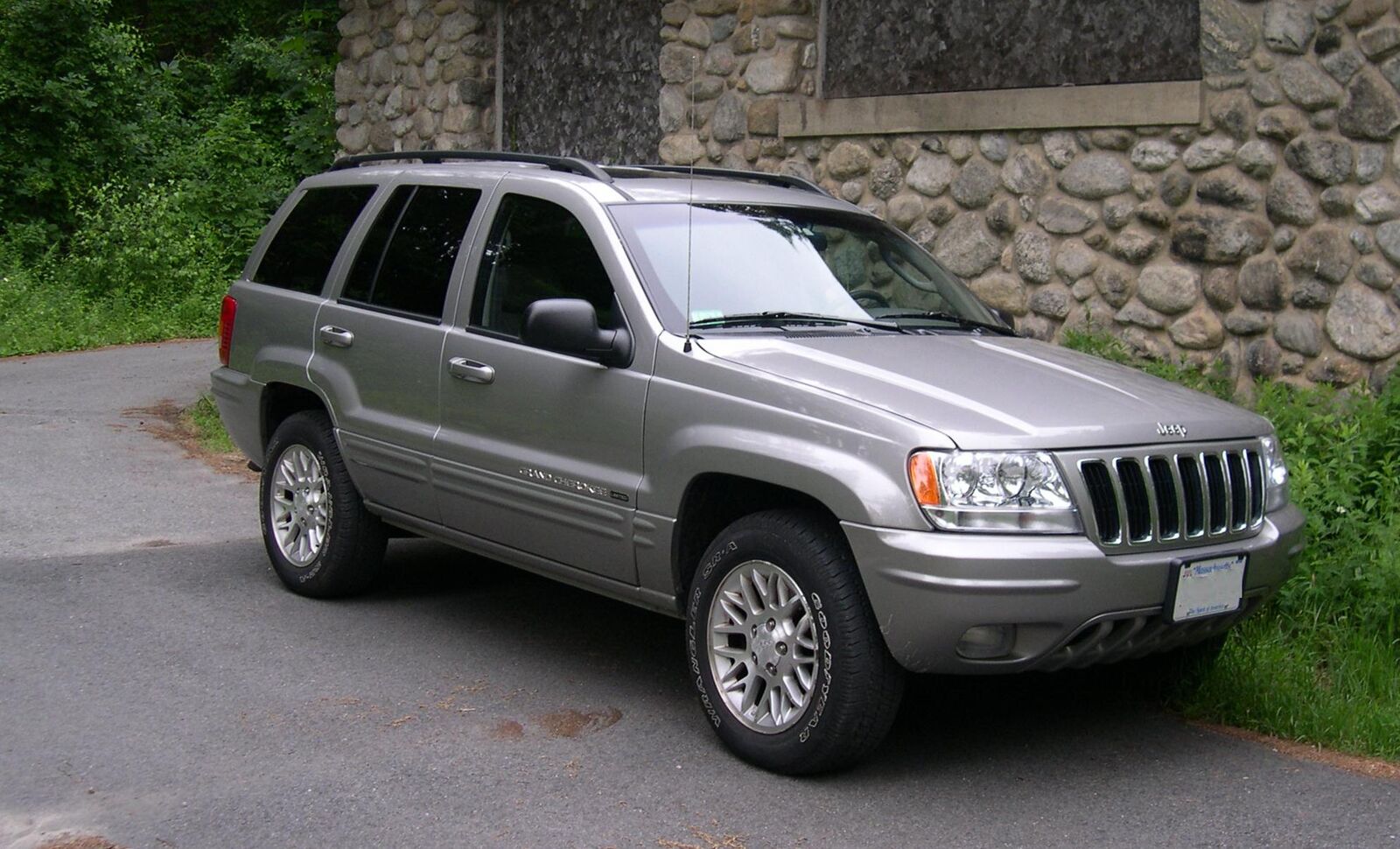

The 4.7 V8, standard and High Output
Both share the same base: 4,701 cm³ (287 cu in), a 90° V8 with one chain-driven overhead camshaft per bank and 16 valves, bore and stroke 93.0 × 86.5 mm, a cast-iron block and aluminium heads.
| Item | Standard 4.7 | 4.7 High Output |
|---|---|---|
| Power, US sales brochure | 235 hp at 4,800 rpm≈ 175 kW / 238 PS | 265 hp at 5,200 rpm≈ 198 kW / 269 PS |
| Torque, US sales brochure | 295 lb-ft at 3,200 rpm≈ 400 Nm | 325 lb-ft at 3,600 rpm≈ 441 Nm |
| Power, Europe 2004 | 167 kW / 227 PS at 4,350 rpm≈ 224 hp; earlier export tables give 162–164 kW | 190 kW / 258 PS at 5,200 rpm≈ 255 hp |
| Torque, Europe | 390 Nm at 3,750 rpm≈ 288 lb-ft | 419 Nm at 4,000 rpm in the 2004 European release; 425 Nm at 3,500 rpm in Dutch and Australian catalogues≈ 309–313 lb-ft |
| Compression ratio | 9.0:1 in the factory manualearly material says 9.3:1 or 9.5:1 | 9.7:1 |
| Crankshaft | Nodular cast iron | Forged steel |
| Piston pins | Pressed | Full-floating |
| Intake valve lift | 11.25 mm | 12.0 mm |
| Knock sensors | Not established; sources disagree | Two, one per bank |
| Fuel, US 2004 owner’s manual | 87 AKI regular | 91 AKI premium recommended, not required |
hp is mechanical horsepower, PS metric horsepower; values marked ≈ are conversions, not separate ratings. Early US press material quoted 260 hp and 330 lb-ft for the HO, and one factory service table prints 270 bhp; the production brochure figures are shown above. No European octane instruction for the HO was found, so none is given.
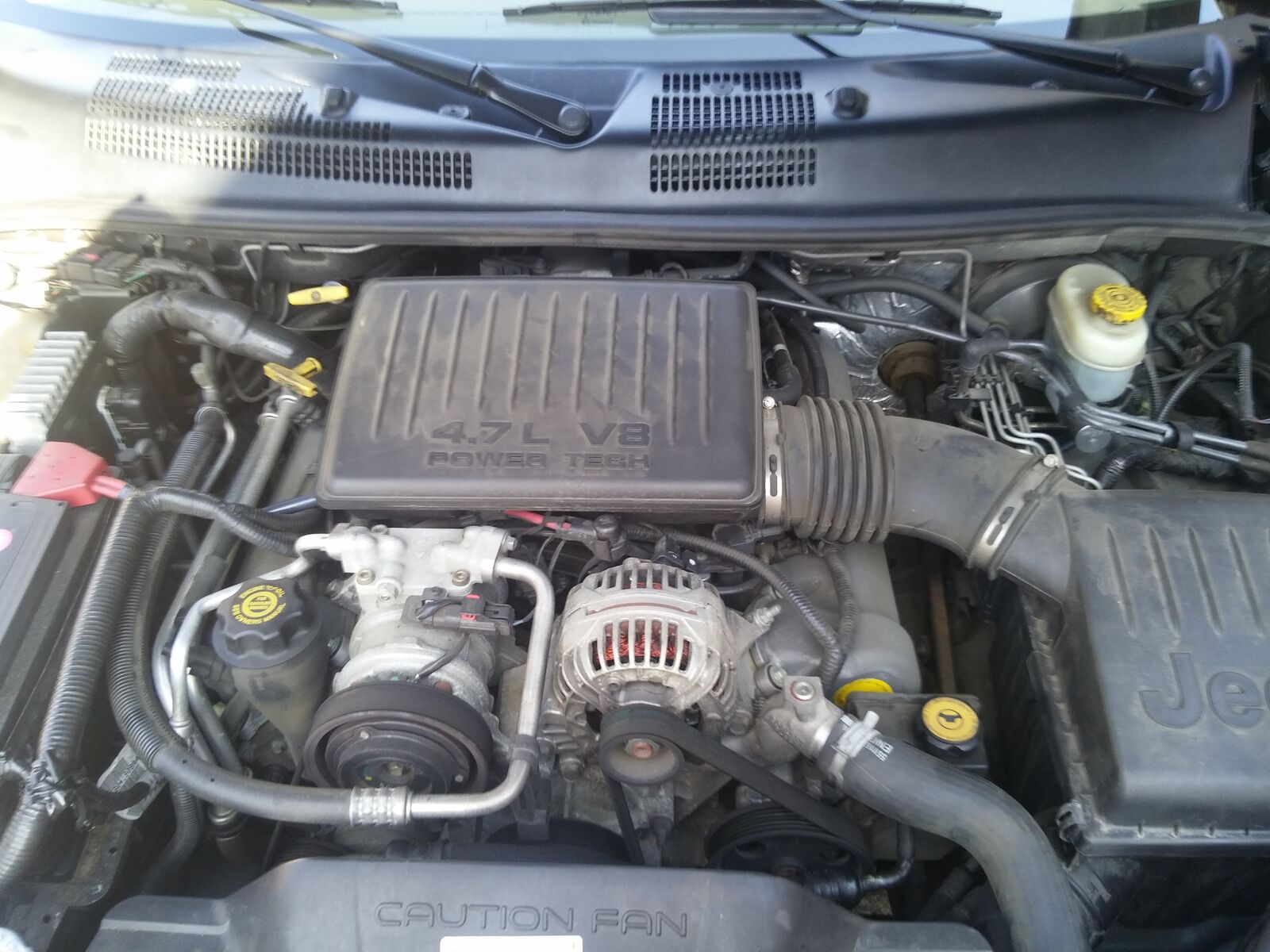

What else changed for the HO
Revised camshaft profiles and valve springs, reshaped combustion chambers, its own spark plugs and engine calibration, and a freer-flowing air intake. The 2002 HO had its own shorter-runner intake manifold; from 2003, reference works say both engines shared the redesigned one.
The two knock sensors sit in the valley under the intake. When they hear knock, the engine computer pulls ignition timing back on all cylinders. That knock retard is exactly the kind of data that lives on the engine’s SCI line, out of reach of an ELM327. Why the engine only gives generic data.
Sources: P1, P2, P3, P4, P6, P8, P9, P10, S4, S5, S7, S8, S9, S11, S13, S14
The 545RFE gearbox
An electronically controlled automatic, sold as a five-speed. It carries a sixth ratio as a spare second gear: 1.67 on the way up, 1.50 when it kicks down. Six forward ratios, but not a six-speed.
- 3.001st
- 1.672nd
- 1.502nd, kickdown
- 1.003rd
- 0.754th
- 0.675th
- 3.00Reverse
The torque converter has an electronically controlled lock-up clutch that can sit open, slip partly or lock fully; the transmission controller decides from driving conditions. With the HO, US cars ran a 3.73:1 final drive.
This gearbox is where the app is most useful today: its controller reports gear, both shaft speeds, converter clutch state, line pressure and more over the PCI bus. What the app reads from it.
Ratios from the US 2003 sales brochure for the HO, matching the 2002 WG service manual. Converter behaviour from the same manual.
Four-wheel drive
Two systems normally came with the HO. Two-wheel drive was offered too, so HO does not automatically mean 4WD.
- Full-time, on demand
Quadra-Trac II
NV247 transfer case with 4 All Time, Neutral and 4 Lo (2.72:1). A gerotor-actuated clutch sends drive to the front axle when the rear starts to slip; low range locks front and rear together. US HO Limited with 4WD.
- Quadra-Trac II plus locking differentials
Quadra-Drive
Adds Vari-Lok progressive locking differentials front and rear. A difference in wheel speed drives a gerotor pump that clamps a clutch pack: no button, no electronics. Standard on the US Overland.
- Elsewhere in the range
Selec-Trac and Quadra-Trac I
Selec-Trac (NV242 transfer case) and, late on, Quadra-Trac I were offered on other versions of the WJ; the 2004 range limited Quadra-Trac I to the 4.0 Laredo. Not the usual HO package.
With the V8 the axles were a Dana 30 at the front and a Dana 44 at the rear.
The electrics this app works with
The WJ is old enough for a simple network and new enough to have a lot on it.
The factory manual calls it the Programmable Communication Interface: PCI, one wire, variable pulse width, about 10.4 kbit/s on average, with the engine computer as the dominant node. It follows SAE J1850 VPW. It is not CAN, which arrived on later cars.
The engine and transmission controllers also have a separate serial link, SCI, used for flashing and for the deeper engine data. An ELM327 speaks J1850 VPW but not SCI.
The diagnostic socket is a 16-way connector at the lower edge of the instrument panel near the steering column. The 2002 WG manual assigns its pins as shown here; the empty ones are not used.
| Pin | Function |
|---|---|
| 2 | PCI bus: everything this app reads today |
| 4, 5 | Ground |
| 6 | SCI receive, engine |
| 14 | SCI receive, transmission |
| 7 | SCI transmit |
| 9 | Body computer flash enable |
| 16 | Battery positive, fused |
The sixteen modules, by their factory names
| In this app | Factory name | Fitted to every car? |
|---|---|---|
| Engine | Powertrain Control Module (PCM) | Yes; diesels use a different engine controller |
| Transmission | Transmission Control Module (TCM) | Yes, separate on the 4.7 |
| ABS | Controller Antilock Brake (CAB) | Yes |
| Body computer | Body Control Module (BCM) | Yes |
| Airbag | Airbag Control Module (ACM), also called Occupant Restraint Controller (ORC) | Yes |
| Instrument cluster | ElectroMechanical Instrument Cluster (EMIC) | Yes |
| Overhead console | Electronic Vehicle Information Center (EVIC) | Depends on equipment |
| Climate control | Automatic Zone Control (AZC) | Only with automatic climate control |
| Driver door | Driver Door Module (DDM) | Yes |
| Passenger door | Passenger Door Module (PDM) | Yes |
| Memory seat | Memory Seat Module (MSM) | Optional |
| Rain sensor | Rain Sensor Module | Optional |
| Radio | Radio | Factory radio only |
| CD changer | CD changer | Optional |
| Immobiliser | Sentry Key Immobilizer Module (SKIM) | Depends on market and equipment |
| Alarm | Intrusion Transceiver Module (ITM) | Export cars |
Sixteen is what answered on the reference car. A base WJ has fewer; the factory documents also list an adjustable-pedals module that this car does not have.
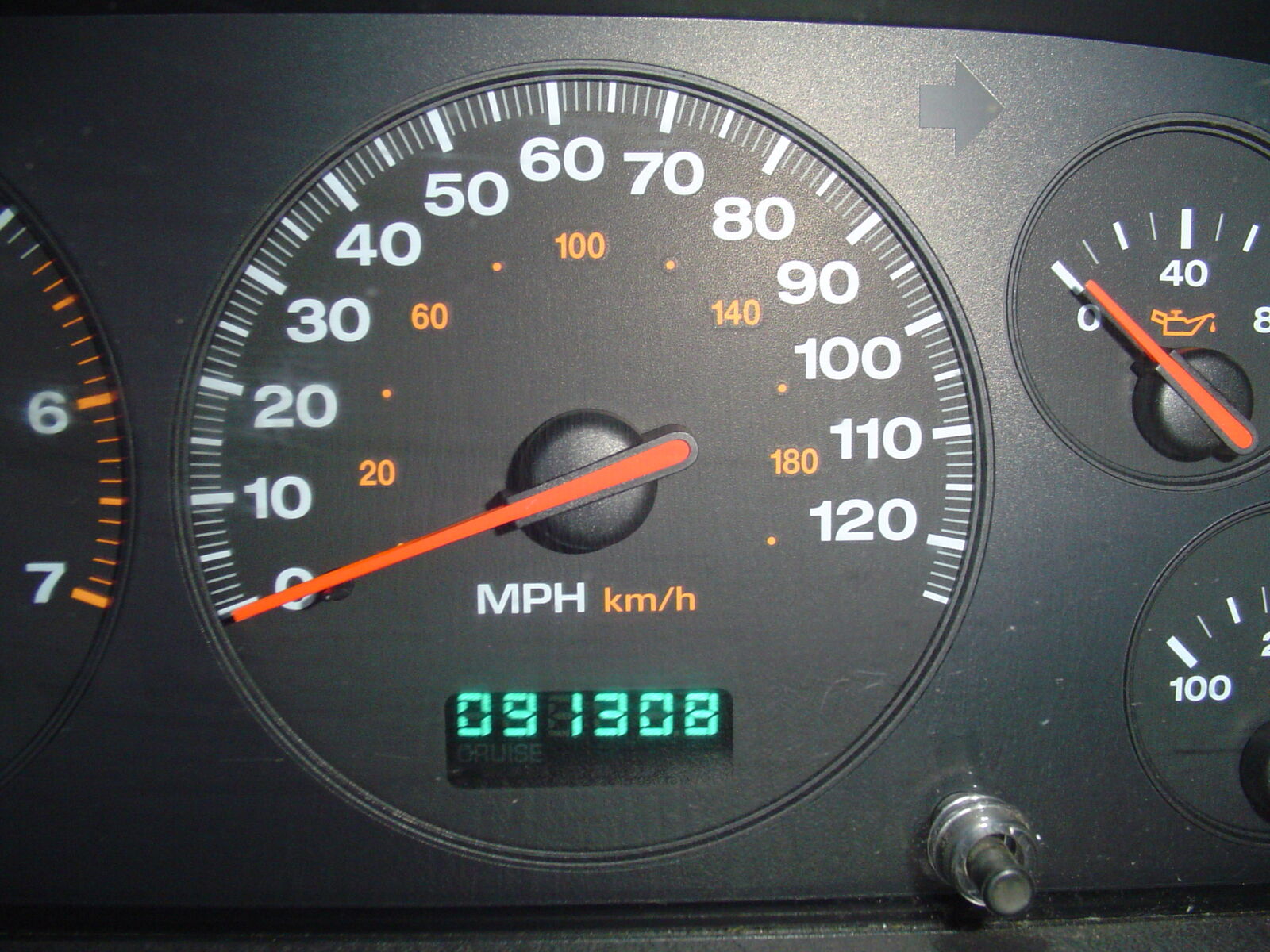

A few more numbers
With the market and the document attached, because they differ.
| Item | Value | Where from |
|---|---|---|
| Wheelbase | 2,690 mm (105.9 in) | US and European manufacturer material |
| Length | 4,610–4,613 mm (181.5 in) | US brochure, US advance sheet, European 2004 release |
| Track | 1,511 mm (59.5 in), front and rear | US manufacturer material |
| Turning circle | 11.4 m (37.4 ft), kerb to kerb | US manufacturer material |
| Fuel tank | 78 litres (20.5 US gal) | US and European manufacturer material |
| Brakes | Discs all round, 305 mm; four wheel-speed sensors, three-channel ABS | US 2002 specifications, US 2003 brochure |
| HO top speed | 206 km/h | European 2004 release; Dutch catalogues say 207–208 km/h |
| HO fuel use, combined | 15.9 l/100 km | European 2004 release; Spanish and Dutch official listings range 15.0–16.5 |
| HO 0–60 mph | 6.7 s | MotorWeek road test, 2002 Overland: one car, one test |

Weights, towing limits and cargo volume are left out on purpose: the published figures mix trims, markets and measuring methods too much to give one honest number.
Photos
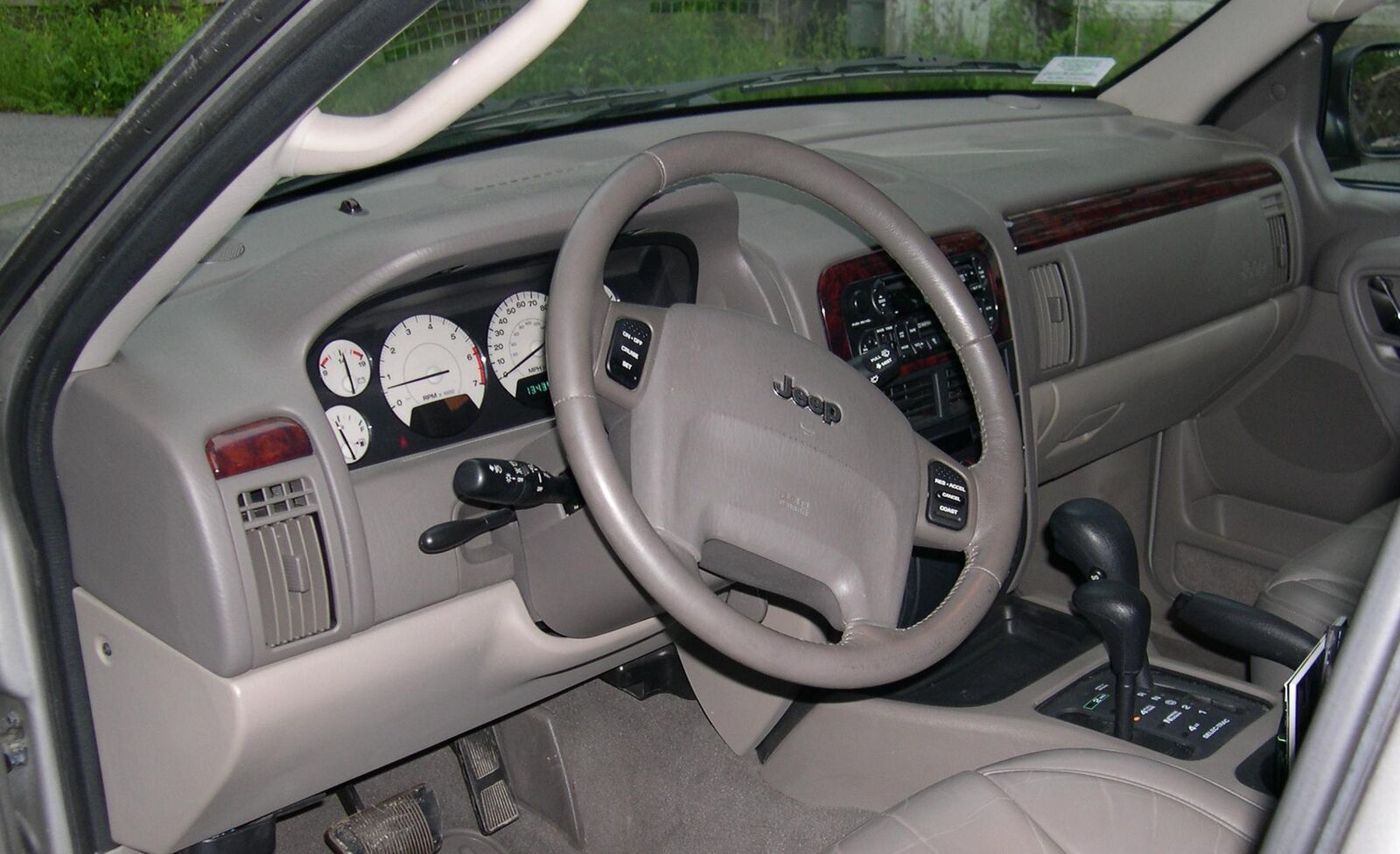
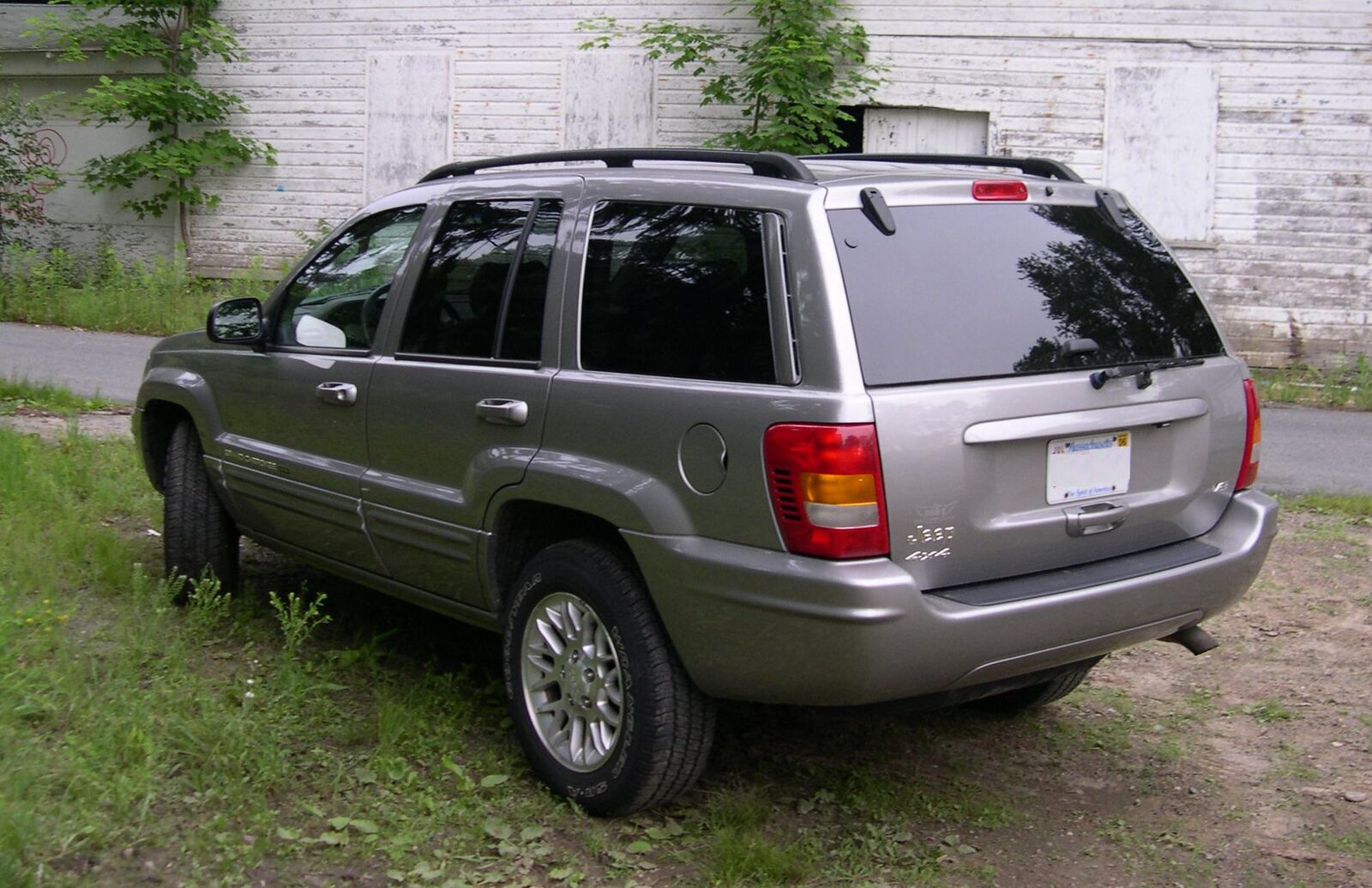
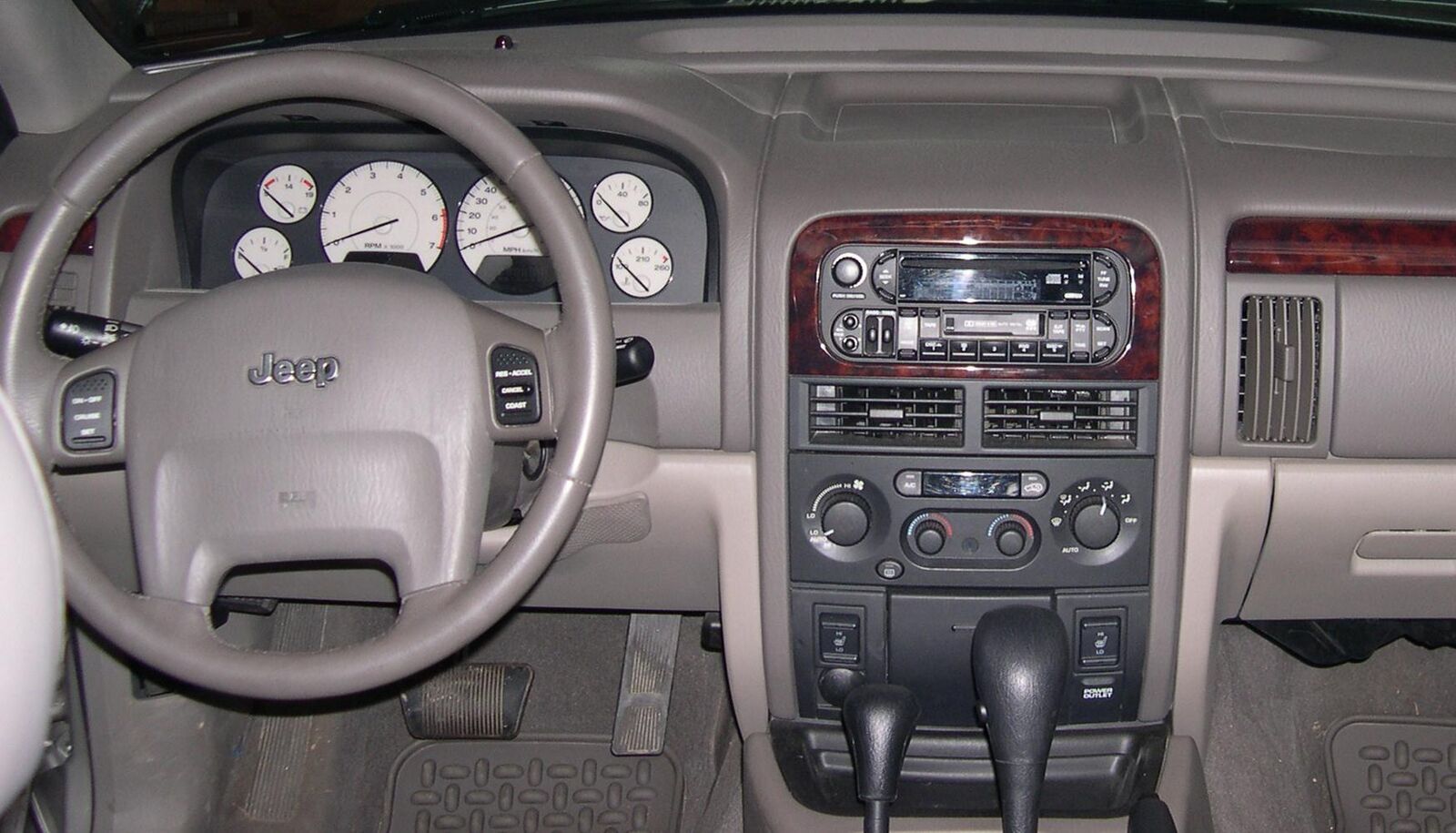
Freely licensed photographs of other people’s cars, credited below each one. None of them shows the project’s test car.



The reference car
The 2002 European-market WG the app is developed and tested on.
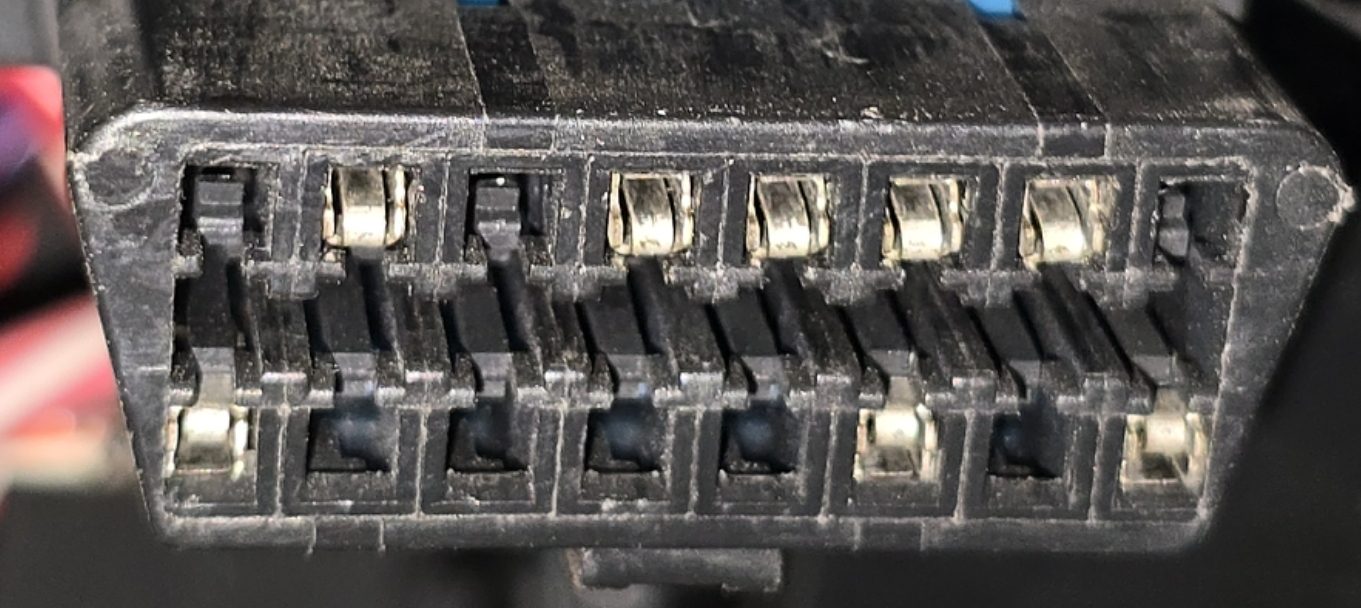
The diagnostic connector on the reference car, seen from the front. Terminals are fitted only in pins 2, 4, 5, 6 and 7 on the top row and 9, 14 and 16 on the bottom row, matching the factory table above.
What the app reads on this car
Live engine and 545RFE data, fault codes from nine modules and fifteen actuator tests, all measured on one 2002 WG.